
Blogs
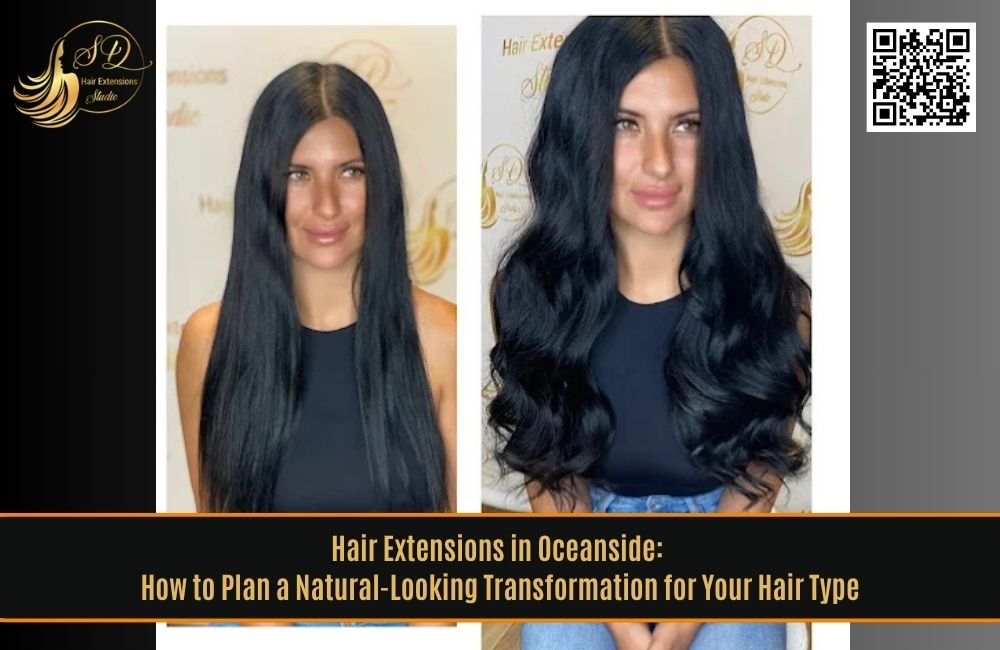
Hair Extensions in Oceanside: How to Plan a Natural-Looking Transformation for Your Hair Type
A natural-looking extension transformation begins with understanding the hair you already have. Clients researching Hair Extensions Oceanside services may arrive with a preferred length, color, or inspiration photo, but those details are only part of the plan. Natural density, strand thickness, texture, haircut, growth pattern, and styling habits all influence how added hair should be selected and distributed.
The objective should not be to make every client’s hair look the same. Professional Hair Extensions work best when the installation is adapted to the individual, creating additional length or fullness without losing the characteristics that make the person’s natural hair unique.
Define What “Natural-Looking” Means for You
A natural result does not necessarily mean a subtle transformation.
Someone can add considerable length and still achieve a believable finish when the extension density, color, texture, and shape are properly balanced. Another client may want almost no additional length and simply need fuller ends.
Before choosing a method, decide what you actually want people to notice.
Do you want longer hair, more density, improved balance around the sides, or a combination of these changes? A clear goal gives the stylist a better foundation for creating a personalized plan.
Your Starting Density Shapes the Entire Transformation
Natural density is one of the most important factors in extension planning.
Someone with thick hair generally needs enough extension hair to continue that fullness through the added lengths. If too little is used, the natural hair may look heavy at the top while the longer ends appear noticeably thinner.
Fine hair presents a different challenge. The goal is often to create visible fullness without adding excessive weight or making attachment areas difficult to conceal.
A Hair Extensions Salon in Oceanside should therefore assess density before determining how much extension hair is appropriate.
Fine Hair Requires Precision Rather Than Maximum Fullness
Fine hair can benefit significantly from extensions when the plan respects what the natural strands can support.
Placement is especially important around the temples, hairline, and other areas where coverage may be limited. Adding too many attachments to delicate sections does not automatically improve the final appearance.
Instead, a stylist may focus extension density where the natural hair offers stronger support and better concealment.
The desired length also deserves consideration. A moderate increase may create a fuller-looking transformation without requiring as much added density as a dramatic length change.
Thick Hair Needs Enough Hair to Maintain Proportion
Clients with thick natural hair face almost the opposite blending challenge.
A dense haircut can create a strong perimeter, particularly when the ends are blunt. If long extensions are added underneath without enough supporting density, the transition can remain visible.
The solution is not simply adding random extra pieces.
Extension hair needs to be distributed so the overall silhouette flows from the natural hair into the new length. Strategic shaping may also be useful when the existing haircut creates a particularly heavy line.
The final style should look balanced from the sides and back, not just from the front.
Straight Hair Makes Small Differences Easier to See
Straight hair can create an elegant extension result, but it is less forgiving of mismatched lengths or density.
Because the strands fall in a relatively uniform direction, a blunt natural perimeter may remain visible if the blend is incomplete. Differences in texture and shine can also become easier to notice.
For naturally straight hair, careful extension selection and finishing are particularly valuable.
The added hair should move similarly to the natural strands so the client does not need to curl the hair every day just to disguise the transition.
Wavy Hair Needs Movement That Continues Through the Lengths
Wavy hair creates natural dimension, but extensions should complement the existing pattern.
If natural hair forms relaxed waves while the added hair behaves very differently after washing, the client may need considerably more styling than expected.
During a consultation, explain whether you normally air-dry, diffuse, blow-dry, or heat-style your hair.
This everyday information can be more useful than arriving with temporarily straightened hair that does not represent how you usually wear it.
A successful texture match should reduce the amount of work required to make natural and extension hair behave cohesively.
Curly Hair Should Be Evaluated in Its Typical State
Curl patterns add another layer to extension planning because shrinkage can affect perceived length.
A client may technically have longer natural hair than it appears when dry, and the extension length must make sense with the hair in its normal styled state.
Density can also appear different when curls expand.
The stylist should understand the client's usual curl routine, preferred shape, and how much definition or volume they want.
Matching curl behavior is important because a difference in pattern can make the natural and extension hair look like separate sections even when the colors match perfectly.
Short Hair Requires a Different Strategy
Going from short hair to noticeably longer extensions can be one of the more technically demanding transformations.
The natural ends need to disappear into the added lengths without leaving an obvious shelf. The shorter the starting point and the blunter the haircut, the more important density and placement become.
Sometimes a slightly more moderate extension length creates a more convincing first transformation.
As the natural hair grows, longer options may become easier to blend.
This approach can be especially helpful for someone growing out a bob, lob, or shorter layered style.
Sparse Areas Should Be Discussed Openly
Clients sometimes seek extensions because certain areas feel less full than they once did.
The first step should be identifying where additional coverage is wanted and whether standard extensions are appropriate for those areas.
Traditional extensions primarily add hair through lengths and selected sections. They are not always the right solution for every type of coverage concern, particularly when the issue is concentrated around the top or crown.
In some cases, a human hair topper may be worth discussing as an alternative or complementary option.
A responsible recommendation should be based on what the client is trying to achieve rather than trying to solve every concern with one service.
Your Current Haircut Can Help or Complicate the Blend
Haircut shape affects extension planning more than many first-time clients expect.
Soft layers can create natural transition points, while a strong blunt line may need additional attention. Very short face-framing sections can also influence how the front of the hairstyle connects with longer extension hair.
That does not mean every client needs a major haircut before installation.
Sometimes subtle shaping after the extensions are placed is enough to create continuity while preserving natural length.
If you are actively growing your hair, tell the stylist so any blending decisions support that goal.
Color Should Follow the Hair’s Natural Dimension
Color matching is not simply finding the closest shade on a ring.
Natural hair can contain darker roots, brighter ends, highlights, lowlights, warm sections, cool sections, and subtle variations created by sun exposure.
Oceanside’s coastal environment and bright outdoor conditions can make color differences particularly noticeable.
For dimensional hair, using more than one extension shade may create a better visual transition. The goal is to reproduce how the natural color moves through the hairstyle rather than creating one uniform block.
Think About the Result When the Hair Is Not Styled
Salon finishing can make almost any hairstyle look especially polished, but your extensions also need to work on ordinary days.
Think about what your hair looks like after a normal wash, during a busy morning, or when you do not have time to curl every section.
If the natural-looking result depends entirely on elaborate heat styling, the extension plan may not fit your lifestyle.
During consultation, ask how the hair is expected to blend when worn straight, naturally textured, tied back, or minimally styled.
Let Your Routine Influence the Amount of Hair
More extension hair means more hair to manage.
Someone who enjoys long styling sessions may be comfortable with significant length and density. Another client may want a noticeable transformation but still needs a wash-and-style routine that fits a demanding schedule.
Oceanside clients may also need to account for beach visits, outdoor exercise, swimming, and coastal wind.
Choosing an appropriate amount of hair can make daily maintenance feel much more realistic.
Reassess the Plan as Your Natural Hair Changes
An extension plan does not need to remain identical forever.
Natural hair grows, haircuts change, color evolves, and clients sometimes discover that their preferences are different after wearing extensions for a while.
Maintenance appointments provide an opportunity to evaluate whether the original density and placement are still appropriate.
Someone who initially needed substantial blending support may require less as the natural hair grows longer. Another client may decide to keep the same length but increase fullness through selected areas.
Personalization should continue beyond the first installation.
Frequently Asked Questions
Can Every Hair Type Wear the Same Extension Method?
No. A method should be chosen according to natural density, strand strength, texture, desired result, styling habits, and other individual considerations.
Do Fine-Haired Clients Need Fewer Extensions?
Not automatically. The amount and placement should be customized. Fine hair may require carefully distributed, lighter attachment areas rather than simply applying a standard quantity.
Why Does Thick Hair Sometimes Need More Extension Hair?
More density may be needed to continue the natural fullness into longer lengths. Otherwise, thick natural ends can look disconnected from thinner extension lengths.
Can Extensions Look Natural Without Being Curled?
Yes. A well-planned installation should aim for a convincing blend in the hairstyles you realistically wear, including straighter or naturally textured looks when appropriate.
Should I Change My Haircut Before Getting Extensions?
Not always. Your existing haircut should first be evaluated. Minor shaping may help certain blunt or heavily layered styles, but unnecessary cutting should be avoided.
Plan Around Your Hair, Not Someone Else’s Transformation
The most useful inspiration photo is still only a reference. Natural-looking extensions depend on adapting the idea to your own density, strand thickness, texture, haircut, color, and lifestyle.
For Oceanside clients, that means considering how the hair will look in everyday coastal life as well as immediately after professional styling. A transformation can be dramatic without appearing disconnected when length, fullness, placement, texture, and color are planned together.
Best Hair Extensions Studio is located in Cardiff and serves clients throughout the greater San Diego area. Wherever you choose to have extensions installed, prioritize a detailed assessment of your natural hair and a plan that is personalized to the way you actually want to wear it.
San Diego Hair Extensions Studio
Address: 2151 Newcastle Ave, Cardiff, CA 92007, United States
Phone: +1 858-205-2043


STAY CONNECTED


Copyright SD Hair Extensions Studio © 2025 | Privacy Policy