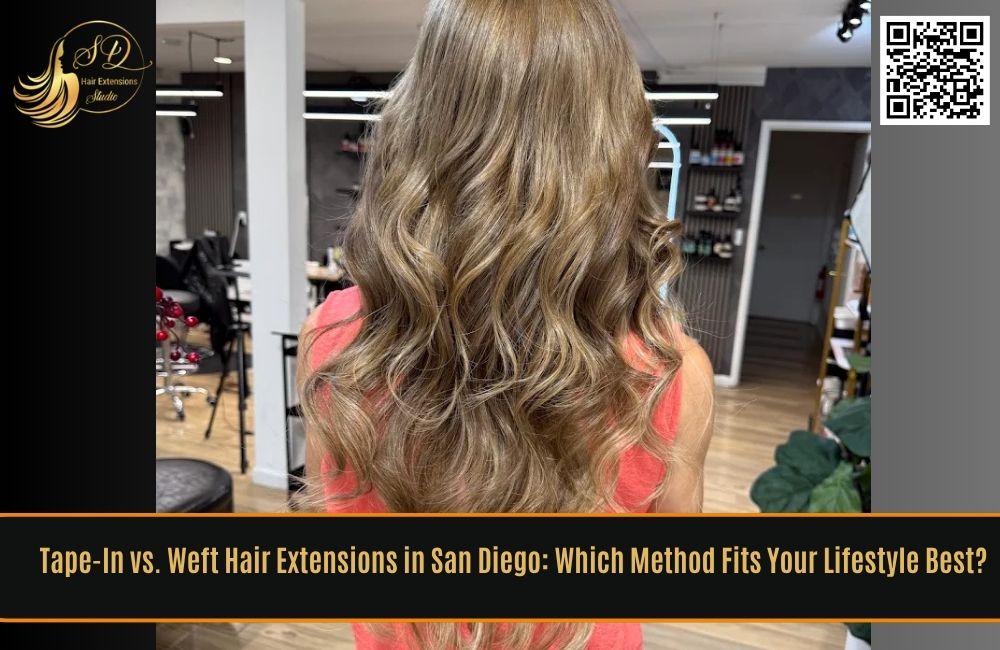
Tape-In vs. Weft Hair Extensions in San Diego: Which Method Fits Your Lifestyle Best?
Choosing between tape-ins and wefts is less about which method is more popular and more about how each one fits your natural hair, daily routine, styling preferences, and maintenance expectations. Both options can create beautiful Hair Extensions, but they behave differently once installed. At San Diego Hair Extensions Studio in Cardiff, certified and licensed specialists assess each client’s hair before recommending a method, helping ensure the final result feels comfortable, looks natural, and works with everyday life.
For clients who exercise regularly, spend time outdoors, style their hair often, or simply want an easier maintenance routine, understanding these differences before booking can make the decision much clearer.
Start With Lifestyle, Not Just Appearance
Two clients can want the same final look but need different extension methods.
One may prefer a lightweight option that lies flat against the scalp and allows faster salon appointments. Another may want stronger overall density and a method that builds fullness through larger sections of the hair.
This is why anyone searching for Hair Extensions Near Me should look beyond before-and-after photos. The right choice also depends on how the extensions will function between salon visits.
A consultation should include questions about exercise, swimming, washing frequency, preferred hairstyles, heat styling, work routines, and how much maintenance time feels realistic.
How Tape-In Extensions Work
Tape-ins use thin adhesive panels that are placed around sections of natural hair. When correctly installed, the panels lie relatively flat and can create a smooth transition between natural hair and added length.
Because the extensions are applied in wider sections than individual bonded methods, tape-in appointments can be efficient while still producing noticeable fullness.
Who May Prefer Tape-Ins?
Tape-ins can appeal to clients who want lightweight volume and a flatter attachment near the scalp. They may be useful for someone seeking added density through the sides, fuller ends, or moderate additional length.
Clients who typically wear their hair down or in lower hairstyles may find tape-ins particularly convenient.
The natural hair must still have enough density to conceal the panels. Placement becomes especially important around the temples, crown, and part line.
What Daily Life With Tape-Ins Is Like
Tape-ins require attention to product placement.
Heavy oils, conditioners, and masks near the adhesive can weaken the attachment and cause premature slipping. Moisturizing products are generally better used through the middle and ends of the hair unless the stylist gives different instructions.
Clients should also dry the tape areas thoroughly after washing, swimming, or intense exercise.
Tape-ins can be removed and professionally reapplied as the natural hair grows. Reuse is one of the practical advantages of the method when the extension hair remains in good condition.
How Weft Extensions Work
Wefts consist of extension hair connected across a wider strip and installed in rows. Depending on the technique, micro rings or another professional attachment system may be used to secure the row.
Because each row carries substantial hair, wefts can create stronger overall density with fewer attachment zones than methods based on individual strands.
They are often considered by clients who want noticeably fuller mid-lengths and ends.
Who May Prefer Wefts?
Wefts can work especially well for clients who already have enough natural density to conceal and support the rows.
Someone with medium or thick hair who wants a fuller transformation may find wefts practical because they build volume efficiently.
They can also be useful when the goal is to create a strong perimeter rather than placing smaller extensions throughout many individual sections.
Clients evaluating the Best Hair Extensions should remember that more density is not automatically better. A stylist still needs to match the amount and placement of the wefts to the client’s natural hair strength.
What Daily Life With Wefts Is Like
Weft wear involves a different maintenance routine.
Clients need to brush carefully around the rows and make sure the scalp and attachment areas are properly cleaned and dried. Hair should not remain damp underneath a row for extended periods.
As natural hair grows, the wefts move farther from the scalp and need professional adjustment.
Because the hair is often reusable, maintenance appointments generally focus on repositioning the rows while assessing both the natural hair and extension quality.
Tape-Ins vs. Wefts for Active Clients
An active lifestyle does not automatically rule out either method.
A client who exercises frequently may prefer the flatter feel of tape-ins, while someone wanting stronger density may still find wefts more suitable.
The important issue is moisture management.
After workouts, the scalp should be allowed to cool, and damp attachment areas should be dried. Repeated tight ponytails can create tension regardless of the method, so low-tension styles are generally more practical.
Clients considering Hair Extensions San Diego services should mention exercise frequency during the consultation so placement and care recommendations reflect their actual routine.
Which Method Works Better for Beach and Swimming?
San Diego’s coastal setting makes swimming an important consideration.
With tape-ins, adhesive areas need careful protection from prolonged moisture and product buildup. After ocean or pool exposure, the hair should be rinsed and dried thoroughly.
Weft rows also need complete drying because moisture can remain trapped beneath the attachment area.
Neither method should be selected solely because it seems more water-friendly. The better choice depends on how often the client swims, how reliably they can manage aftercare, and what their natural hair can support.
Styling Flexibility Is Another Key Difference
Both methods can support a variety of hairstyles, but placement needs to reflect how the client usually wears the hair.
Tape panels can become visible if positioned too close to areas exposed by high ponytails or certain updos.
Weft rows can also show if the hair is lifted in a way that exposes the row.
A professional Hair Extensions Salon should ask about ponytails, buns, braids, side parts, and half-up styles before installation.
That information allows the stylist to place attachments in areas that remain more discreet during normal styling.
Which Method Is Better for Fine Hair?
Fine hair requires careful assessment regardless of method.
Tape-ins may provide lightweight coverage when the natural hair is strong enough to support the panels. Their flat design can make them discreet in suitable areas.
Wefts may also be possible in some fine-hair cases, but the supporting sections need enough density to carry the row without excessive tension.
The decision should be based on strand strength and available coverage rather than a general rule that one method always works better.
Which Method Is Better for Thick Hair?
Thick hair often needs enough extension density to continue its natural fullness through the added length.
Wefts can be efficient for creating this stronger density.
Tape-ins may also work well when distributed properly, especially when the client wants more controlled placement through selected areas.
The stylist should consider the natural haircut too. Thick blunt ends may require additional extension hair and professional blending so the transition does not look abrupt.
Maintenance Is Where the Difference Becomes Most Noticeable
Both tape-ins and wefts move as natural hair grows, but their maintenance appointments are different.
Tape-ins are professionally removed, prepared with fresh adhesive, and reapplied closer to the scalp.
Wefts are adjusted by repositioning the row according to the installation technique.
Clients should know the recommended maintenance cycle before choosing a method because missed appointments can lead to tangling, visible attachments, or uneven tension.
Frequently Asked Questions
Are Tape-Ins Faster to Install Than Wefts?
Appointment length depends on the amount of hair and the complexity of the service, but tape-ins can provide relatively efficient application because each panel covers a wider section.
Do Wefts Feel Heavier?
They can create stronger concentrated density because the hair is installed in rows. Correct placement and weight distribution are essential for comfortable wear.
Can Both Methods Be Reused?
Yes, when the extension hair remains in suitable condition and is professionally maintained.
Which Method Looks More Natural?
Both can look natural when the color, texture, density, and placement are properly matched. The client’s natural hair determines which attachment system can be concealed most effectively.
Can I Switch From Tape-Ins to Wefts Later?
Yes, if natural hair is suitable. A maintenance or removal appointment is a useful time to reassess the method.
Choose the Method That Works Beyond the Salon
Tape-ins offer flat, lightweight attachment and convenient reapplication, while wefts provide strong density through structured rows. Neither method is universally better. The strongest choice is the one that matches your natural hair, routine, styling habits, and maintenance preferences.
Schedule a consultation with San Diego Hair Extensions Studio in Cardiff to compare tape-ins and wefts based on your individual hair and the way you live day to day.
San Diego Hair Extensions Studio
Address: 2151 Newcastle Ave, Cardiff, CA 92007, United States
Phone: +1 858-205-2043
