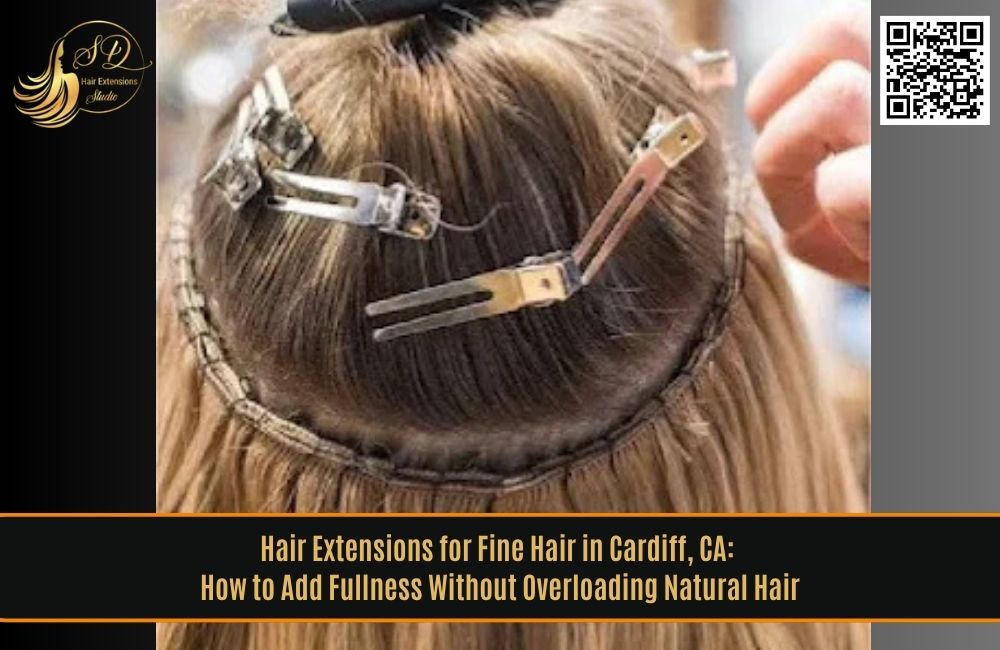
Hair Extensions for Fine Hair in Cardiff, CA: How to Add Fullness Without Overloading Natural Hair
Fine hair can benefit beautifully from Hair Extensions, but the installation has to be approached differently from services designed for thick or dense hair. The goal is not simply to attach more hair. It is to create visible fullness while respecting the strength, density, and movement of the natural strands. At San Diego Hair Extensions Studio in Cardiff, certified and licensed specialists customize extension plans so clients can achieve fuller-looking hair without creating unnecessary bulk or tension.
For clients with fine hair, the most natural result often comes from using less hair more strategically. Attachment size, placement, color, texture, and final shaping all contribute to whether the finished style feels lightweight and believable.
Fine Hair Needs a Proportionate Extension Plan
Fine hair describes the diameter of each individual strand, while low-density hair refers to having fewer strands overall. A client may have fine hair with plenty of density, or fine hair that is also sparse.
That distinction matters because the natural hair has to support the weight of the extensions.
A professional consultation should evaluate how much natural hair is available in each section and where additional density can be placed safely. The stylist can then determine whether the priority should be fuller ends, added side volume, subtle length, or a combination of goals.
People searching for Hair Extensions Near Me should look for a provider that examines the natural hair before discussing how many extensions will be installed.
Why More Hair Is Not Always Better
When someone wants dramatic volume, it may seem logical to use as much extension hair as possible. For fine hair, that approach can work against the desired result.
Too much added density may create a heavy appearance at the scalp while making attachment points harder to conceal. It can also place more weight on natural sections than necessary.
The Best Hair Extensions for fine hair create proportion. The finished hair should look fuller, but the installation should still move naturally and feel comfortable during everyday wear.
A skilled stylist considers how the added weight is distributed rather than concentrating too much hair in one zone.
Focus on the Areas That Need Fullness Most
Fine hair does not always need a full-head transformation.
Some clients have enough density at the back but notice thinness near the sides. Others have strong roots but wispy ends. A targeted plan can address those concerns without adding unnecessary attachments elsewhere.
Strengthening Thin Ends
When hair becomes transparent toward the bottom, extensions can be cut close to the existing length to make the perimeter appear denser.
This approach can create a substantial visual improvement without dramatically changing how long the hair looks.
Building Side Volume
Fine hair around the face may make the overall hairstyle appear less balanced. Lightweight extensions can be positioned through suitable side sections to create a fuller silhouette.
Placement must remain conservative near the temples because these areas are often more delicate and visible.
K-Tips Can Offer Detailed Placement
K-Tips are individual strands attached with small keratin bonds. Their strand-by-strand format gives the stylist control over exactly where additional density is needed.
For fine hair, bond size is especially important. Smaller customized attachments can help create discreet placement while avoiding unnecessary bulk.
K-Tips may be useful when the client wants natural movement or selective fullness rather than broad rows of added hair.
The amount of natural hair supporting each bond should be appropriate for the weight of the extension strand. A professional installer adjusts the section size rather than applying identical bonds throughout the head.
Tape-Ins May Provide Lightweight Fullness
Tape-ins use flat adhesive panels positioned around small sections of natural hair.
For appropriate fine-hair clients, their flat design can create smooth volume without prominent attachment points. They may be particularly useful when the client wants broader fullness through the sides or lower sections.
However, the natural hair between the tape panels must be strong enough to support the weight evenly.
Clients considering Hair Extensions San Diego services should ask how tape size, panel placement, and extension weight will be adapted to their natural density.
A customized application matters more than simply choosing the method.
Wefts Require Careful Density Assessment
Wefts can provide excellent fullness, but fine hair requires careful evaluation before a row is installed.
A stylist needs to determine whether the supporting sections have enough density and strength. In some cases, a limited or highly customized weft placement may be appropriate. In others, individual or lighter attachment methods may create a better result.
The decision should be based on the client's hair rather than a predetermined package.
A professional Hair Extensions Salon should be willing to recommend a different technique when a heavier method does not suit the natural strands.
Color Matching Helps Fine Hair Look Fuller
Color can influence how dense hair appears.
When extension hair matches the natural shade too flatly, the result may lack dimension. Using carefully selected tones can create depth that makes the hair look fuller without adding excessive physical volume.
For highlighted or dimensional hair, several shades may be blended to recreate the natural variation from roots to ends.
San Diego Hair Extensions Studio uses premium 100% virgin Slavic human hair in a range of shades, textures, and lengths. The studio also works with custom-made tapes, wefts, clip-ins, wigs, and other specialized hair products produced through its own factory in Russia.
Texture Is Just as Important as Color
Fine straight hair should not be paired with extension hair that feels excessively coarse or bulky. Similarly, fine wavy hair benefits from an extension texture that works with its natural movement.
A close texture match reduces the need for constant heat styling and helps the installation blend after washing.
The goal should be for the natural hair and extension hair to behave similarly during everyday styling.
Keep Length Expectations Realistic
Fine hair can support added length in suitable cases, but longer does not automatically mean better.
Extreme length requires enough density through the mid-lengths and ends to maintain a balanced shape. If the natural hair is very delicate, moderate length with stronger volume may create a more convincing result.
For example, a client with fine shoulder-length hair may see a more flattering transformation by extending to mid-back with fuller ends rather than choosing waist-length hair with insufficient density.
A consultation allows the stylist to compare these options visually before installation.
The Finishing Cut Matters
Extensions designed for fine hair should not simply be attached and left untouched.
Professional shaping helps distribute fullness and connect the natural hair with the added pieces.
The stylist may soften thin areas, strengthen the perimeter, or create light face-framing details while preserving enough density through the ends.
Over-layering should be avoided because removing too much extension hair can undo the fullness the service was designed to create.
Fine Hair Requires Consistent Home Care
Lightweight installations still require professional-level maintenance at home.
Brush gently while supporting attachment areas, and avoid pulling directly against bonds, tapes, or rows. Products should be applied according to the specific installation method, with heavy oils and conditioners generally kept away from attachment zones.
Dry the roots thoroughly after washing or exercise, and avoid sleeping with damp extensions.
Clients should also change the position of ponytails and buns rather than applying repeated tension to the same areas every day.
Frequently Asked Questions
Can Fine Hair Look Naturally Fuller With Extensions?
Yes. Strategic placement can strengthen thin ends, add side density, or create subtle overall fullness while maintaining a natural appearance.
Do Fine-Hair Clients Need Fewer Extensions?
Often, but not always. The amount depends on natural density, strand strength, current length, and the desired result. A customized plan is more important than a specific number of pieces.
Can Fine Hair Have Long Extensions?
Potentially, if the natural hair can safely support the installation. Moderate length may sometimes provide a better balance between appearance, comfort, and density.
Are Smaller Attachments Better for Fine Hair?
Smaller attachments can be useful because they may be easier to conceal and allow detailed weight distribution. The correct size still depends on the natural section supporting them.
Can Extensions Help With Fine Hair Without Changing Length?
Yes. Extensions can be cut to match the existing length and used mainly to create fuller sides, stronger ends, or increased density.
Create Fullness Without Making Fine Hair Feel Heavy
Fine hair does not need an oversized installation to look noticeably fuller. The strongest results come from strategic placement, suitable attachment size, premium hair, detailed color matching, and realistic length planning.
Schedule a consultation with San Diego Hair Extensions Studio in Cardiff to explore lightweight extension options tailored to your natural density, texture, haircut, and desired level of fullness.
San Diego Hair Extensions Studio
Address: 2151 Newcastle Ave, Cardiff, CA 92007, United States
Phone: +1 858-205-2043
