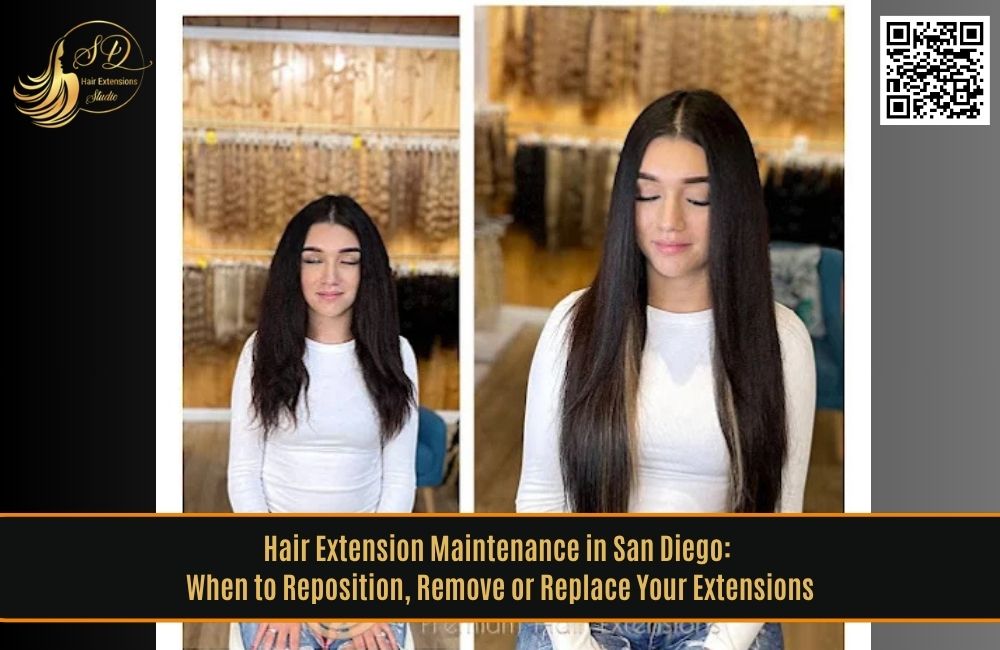
Hair Extension Maintenance in San Diego: When to Reposition, Remove or Replace Your Extensions
Professional maintenance is what keeps Hair Extensions looking natural, feeling comfortable, and supporting the health of the client’s own hair. Installation day may deliver the visible transformation, but long-term results depend on what happens as the natural hair grows, attachments move, and extension strands experience daily wear.
At San Diego Hair Extensions Studio in Cardiff, maintenance decisions are based on the method installed, the condition of the extension hair, natural growth, home care, and the client’s current styling goals. Knowing the difference between repositioning, removal, and replacement helps clients book the right service before small issues become larger problems.
Why Maintenance Is Part of the Extension Service
Extensions do not stay in their original position permanently. Natural hair continues growing, which gradually moves bonds, tapes, rings, or weft rows farther from the scalp.
This change can affect:
How securely the extensions sit
Whether attachments remain hidden
How easily the roots can be brushed
The balance of weight across the head
The way the finished style blends
The comfort of everyday wear
Clients searching for Hair Extensions Near Me should ask how the salon manages follow-up care, not only how the first installation is completed.
Repositioning: When the Hair Is Still Usable
Repositioning means moving reusable extension hair closer to the scalp after natural growth has changed the placement.
Tape-In Repositioning
Tape-ins are professionally removed, cleaned, prepared with new adhesive, and applied again using fresh sections of natural hair. The extension hair may be reused if it remains soft, strong, and suitable for the desired style.
Repositioning may be due when:
Tape panels sit noticeably below the roots
Tabs begin showing in common hairstyles
Sections no longer lie flat
Root growth makes styling difficult
Some panels begin lifting or slipping
Weft and Micro-Ring Adjustments
Weft rows also move downward as the natural hair grows. During maintenance, the stylist may open the attachment system, inspect the supporting hair, and move the row back into a secure position.
An adjustment should restore comfort and balance without adding unnecessary tension.
Why Timing Matters
Waiting too long can allow naturally shed hairs to collect around attachments, create tangling, or place uneven pressure on the remaining strands. Timely repositioning is usually simpler than correcting an overdue installation.
Professional Removal: When Extensions Need to Come Out
Removal may be the planned end of a wear cycle or a necessary step before changing methods, color, length, or density.
Removing K-Tips
K-Tip bonds are softened with the proper professional product and carefully separated. Each strand is removed without pulling the natural hair.
Attempting to break, cut, or slide bonds out at home can cause avoidable damage.
Removing Tape-Ins
Tape adhesive must be released correctly before the panels are separated. Remaining residue should be removed gently so the natural hair can be cleansed and evaluated.
Removing Wefts
Wefts and ring-based systems require controlled opening or unthreading. Professional removal prevents accidental cutting and allows the stylist to inspect the sections that supported the rows.
A qualified Hair Extensions Salon should treat removal as a technical service, not an afterthought.
Replacement: When Repositioning Is No Longer Enough
Extension hair can often be reused, but it does not last forever. Replacement becomes appropriate when the hair no longer delivers the expected softness, density, color match, or styling performance.
Signs the Hair May Need Replacing
New extension hair may be recommended when:
The ends have become noticeably thin
Dryness returns quickly after conditioning
Tangling continues despite proper brushing
The color has faded or shifted significantly
Repeated trimming has reduced the length
The texture no longer matches the natural hair
The client wants a major color or style change
The Best Hair Extensions are not necessarily the oldest set that can still be attached. They are the extensions that remain appropriate for the client’s current hair, comfort, and appearance goals.
Partial Replacement vs. a Full New Set
Not every maintenance appointment requires replacing everything.
Partial Replacement
Some areas experience more friction, heat, sunlight, or styling than others. Pieces around the face or lower lengths may wear faster than protected interior sections.
A partial replacement can restore fullness where needed while allowing stronger extension hair to remain in use. It may also be helpful when a client wants to refresh a few faded shades or replace pieces that have become shorter through repeated trimming.
Full Replacement
A complete new set may be recommended when most of the hair has lost quality, the client wants a substantially different length or shade, or the existing pieces no longer support a balanced result.
This approach prevents the stylist from combining fresh hair with older strands that may behave differently during washing, drying, and styling.
What Happens During a Maintenance Assessment?
A professional appointment should begin with evaluation rather than automatic reinstallation.
The stylist may review:
Attachment security and placement
Tangling or buildup near the roots
Natural hair strength and density
The condition of the extension lengths
Color consistency from roots to ends
The client’s current styling routine
Changes in exercise, swimming, or product use
Whether the original method still fits the client
For clients comparing Hair Extensions San Diego services, this assessment is an important sign of individualized care. The recommendation should reflect the current condition of the hair rather than repeating the original installation plan without review.
San Diego Habits That Can Affect Maintenance
Local routines can influence how quickly extensions need professional attention.
Ocean and Pool Exposure
Saltwater and chlorine can leave the lengths dry and increase tangling. Secure the hair before swimming, rinse promptly afterward, and dry the attachment areas thoroughly.
Outdoor Fitness
Sweat and repeated tight hairstyles may create buildup or tension near the roots. Looser workout styles and careful drying can help protect the installation.
Sun and Heat Styling
Frequent sun exposure may shift color, while excessive hot-tool use can weaken or dry the extension hair. Heat protection and sensible temperatures support a longer usable life.
Coastal Humidity
Humidity can alter texture and increase frizz, especially when the extension hair does not closely match the client’s natural pattern. Appropriate products and professional texture matching can make everyday care easier.
How to Extend the Time Between Appointments Safely
Good home care helps maintain appearance, but it should never be used to postpone overdue professional service.
Brush in sections, support the attachment area, and work from the ends upward. Keep heavy oils and masks away from tapes, bonds, rings, and rows unless directed otherwise. Wash the scalp gently, rinse thoroughly, and dry the roots before sleeping or tying up the hair.
Changing the position of ponytails and buns can also prevent repeated tension in the same areas. A loose braid before bed may reduce friction and make morning brushing easier.
Clients should also pay attention to how the installation feels. A change in comfort can be an early sign that a row has loosened, a bond has shifted, or tangling is developing near the roots.
Maintenance Mistakes to Avoid
Do not tighten loose attachments yourself, cut out tangles near the roots, apply household solvents to adhesive, or use pliers on rings.
Home adjustments can compromise the natural hair and make professional correction more difficult.
Another common mistake is waiting until the installation becomes painful. Discomfort, severe matting, sudden slipping, or visible attachment movement should be assessed promptly.
Using excessive oil near the roots is another frequent problem. While extension lengths need moisture, attachment areas usually require lighter product use. Follow the instructions provided for the exact method installed.
Frequently Asked Questions
Can Extensions Be Repositioned Indefinitely?
No. Reusable methods may support several applications, but the extension hair must still meet quality, density, texture, and color standards at every visit.
Do I Need a Break Between Installations?
That depends on the condition of the natural hair and scalp. A specialist may reinstall immediately, modify the placement, recommend treatment, or suggest a rest period.
Why Are Some Pieces Replaced Before Others?
Different sections experience different levels of friction, sunlight, heat, brushing, and styling. Selective replacement can create a more consistent finish without discarding hair that remains usable.
Can I Switch Methods During Maintenance?
Yes, when the natural hair is suitable. Maintenance is a useful time to reconsider comfort, styling flexibility, upkeep, and lifestyle changes.
What Should I Do if an Attachment Suddenly Feels Loose?
Avoid pulling, cutting, or trying to secure it with household products. Isolate the section gently and contact the studio for professional evaluation.
Can Maintenance Improve the Overall Style?
Yes. A maintenance visit may include repositioning, replacing selected pieces, refreshing the blend, adjusting density, or reshaping the ends to restore a polished finish.
Schedule the Right Maintenance Service in Cardiff
Repositioning preserves reusable hair, removal safely completes a wear cycle, and replacement restores quality when older strands no longer perform as expected. The right choice depends on careful evaluation rather than a fixed schedule alone.
Contact San Diego Hair Extensions Studio in Cardiff to have your installation assessed and receive a personalized maintenance plan based on your method, natural hair, lifestyle, and desired result.
San Diego Hair Extensions Studio
Address: 2151 Newcastle Ave, Cardiff, CA 92007, United States
Phone: +1 858-205-2043
