
Blogs
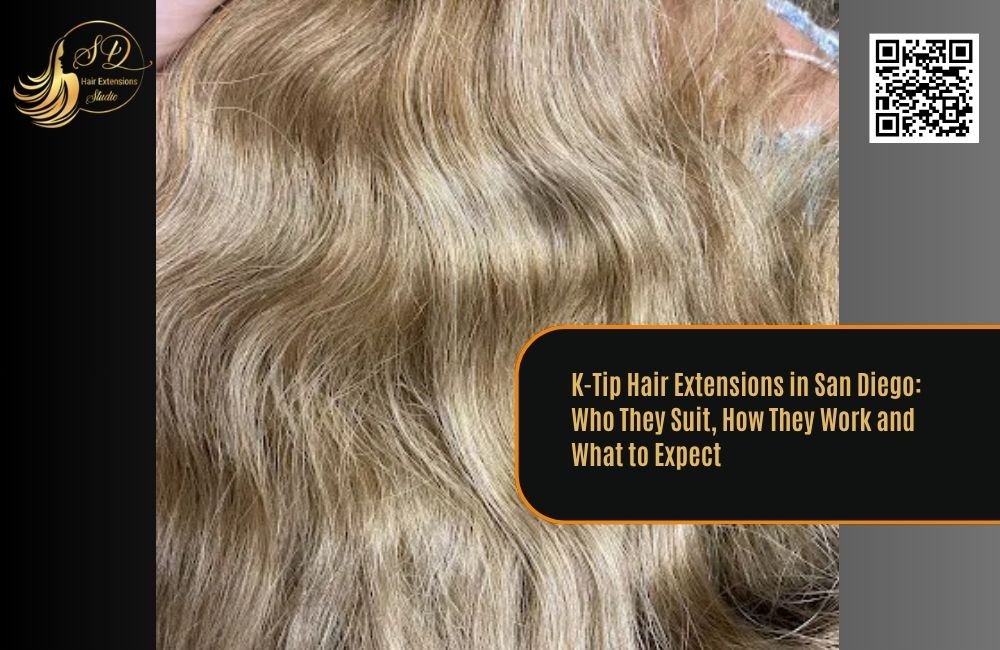
K-Tip Hair Extensions in San Diego: Who They Suit, How They Work and What to Expect
K-Tips are one of the most customizable ways to add length and density with Hair Extensions. Instead of attaching hair in broad panels or rows, K-Tips are installed strand by strand using small keratin bonds. This gives the stylist detailed control over placement, movement, and fullness, making the method appealing to clients who want a natural-looking transformation that still supports flexible everyday styling.
At San Diego Hair Extensions Studio in Cardiff, certified and licensed specialists customize K-Tip installations according to natural density, strand strength, texture, color, haircut, and lifestyle. Understanding the process before booking can help clients decide whether this method fits their expectations.
What Exactly Are K-Tip Hair Extensions?
K-Tips are individual human hair extension strands with a keratin-based tip at one end. During installation, a trained stylist softens that keratin and shapes it around a carefully selected section of natural hair.
Once cooled, the small bond holds the extension securely in place.
Because the strands are attached individually, the stylist can vary their placement throughout the head. Some areas may need additional fullness, while others require fewer or smaller bonds.
This level of control makes K-Tips different from extension systems that add hair in wider sections.
Who May Be a Good Candidate for K-Tips?
K-Tips can potentially work for fine, medium, and thick hair when the natural strands are healthy enough to support the added weight.
Density is only one part of the decision. The stylist should also consider current breakage, scalp condition, chemical history, natural length, and the amount of volume the client wants.
Someone searching for Hair Extensions Near Me should expect this assessment before an installation is scheduled. Choosing K-Tips from online photos alone does not account for whether the method is appropriate for the client’s actual hair.
Clients who regularly change their part, wear loose waves, braid their hair, or create different styles may appreciate the movement created by individual bonds.
Why K-Tips Work Well for Customized Density
Not every client needs equal fullness throughout the entire head.
For example, someone may have strong density in the back but noticeably finer hair through the sides. Another client may already have long hair but want thicker ends.
Individual bonds allow the stylist to build volume where it makes the greatest visual difference.
This is why the Best Hair Extensions should not be judged by how many strands are installed. A successful transformation uses enough hair to create balance while avoiding unnecessary weight.
What Happens During a K-Tip Consultation?
A professional consultation establishes the installation plan before any bonds are applied.
The stylist examines the natural hair and discusses the desired length, fullness, and overall style. Everyday habits also matter. Frequent workouts, swimming, heat styling, ponytails, and braids can influence placement and aftercare.
Color matching is another important part of the appointment.
Natural hair often contains several tones rather than one uniform shade. Roots may be deeper, highlighted sections brighter, and ends lighter. Combining more than one extension shade can create a more natural transition.
San Diego Hair Extensions Studio uses premium 100% virgin Slavic human hair in different colors, textures, and lengths, allowing the installation to be customized more precisely.
How K-Tip Installation Works
The installation begins with careful sectioning.
A small amount of natural hair is separated, and the keratin-tipped extension is positioned near that section. The stylist uses a professional tool to soften the keratin and forms a discreet attachment.
That process continues throughout the planned areas until the desired amount of length and density has been achieved.
Bond size should not be identical for every client. Fine sections may require smaller attachments, while stronger areas may support different placement.
Clients comparing Hair Extensions San Diego providers should ask how the specialist adjusts bond size and weight according to natural density.
The bonds should sit securely while still allowing normal movement. Persistent pulling or sharp pressure is not something a client should simply accept.
What Do K-Tips Feel Like During Daily Wear?
Clients may notice the bonds during the first days because they are adjusting to having attachment points in the hair.
Once accustomed to the installation, professionally placed K-Tips should allow the hair to move naturally.
Because the bonds are separate, clients can often wear loose styles, waves, low or high ponytails, half-up styles, and braids when the placement has been planned appropriately.
The best time to discuss preferred hairstyles is before installation so the specialist can position the attachments around the way the client normally wears their hair.
How Should K-Tips Be Washed?
The scalp still needs regular cleansing while wearing extensions.
Shampoo should be worked gently through the scalp without aggressively rubbing the keratin bonds together. Conditioner and rich treatments are generally better concentrated through the mid-lengths and ends rather than directly on the attachments.
After washing, drying the bond area is important. Roots should not remain damp for long periods, particularly before sleeping.
A professional Hair Extensions Salon should demonstrate washing and drying techniques instead of expecting first-time clients to figure out the routine themselves.
Brushing K-Tips Without Creating Excess Tension
Brushing technique can affect both comfort and extension wear.
Begin with the ends and gradually move upward rather than pulling a brush from the scalp through tangled lengths.
Supporting the hair above the attachments while brushing can reduce unnecessary tension on the natural strands.
Clients should also use an extension-appropriate brush that can move through the hair without repeatedly catching the keratin bonds.
Regular gentle brushing can prevent small tangles from developing into more difficult root matting.
Heat Styling With K-Tip Extensions
Premium human hair can be curled, straightened, waved, and blow-dried, but hot tools should not be placed directly against the keratin bonds.
Repeated high heat can weaken the attachment and contribute to dryness through the extension lengths.
Heat protectant should be used before styling, and excessively high temperatures should be avoided when a lower setting can create the same result.
For clients living an active San Diego lifestyle, sun exposure is another consideration. Frequent outdoor time can contribute to color fading and dryness, making heat moderation and moisture care especially useful.
Can Fine Hair Wear K-Tips?
Fine hair may be suitable for K-Tips when the installation is carefully customized.
Smaller bonds can be used in certain areas to reduce bulk and maintain discreet placement. The stylist may also limit the number of extensions around particularly delicate sections.
The objective is not maximum fullness at any cost. It is controlled density that looks natural without overwhelming the supporting strands.
Clients with substantial breakage, active thinning, or fragile hair may need another solution. A professional consultation should determine whether K-Tips are appropriate before proceeding.
What About Thick or Short Hair?
Thick hair often requires enough extension density to continue the natural fullness through the new lengths. Installing too little hair can create a visible contrast between dense natural sections and thinner extension ends.
Short hair presents another challenge because enough natural coverage must remain above the bonds.
Professional cutting and blending may be needed after installation to connect shorter natural layers with the longer extension hair.
In both situations, customized placement is more important than simply adding more strands.
When Do K-Tips Need Professional Removal?
K-Tips are designed for extended wear, but they should not remain installed indefinitely.
As natural hair grows, the keratin bonds gradually move farther from the scalp. Eventually, removal becomes necessary so the natural hair can be properly evaluated.
Waiting too long may make root tangling more difficult because naturally shed strands remain trapped around the attachments until the extensions are removed.
Natural growth rate, home care, heat exposure, and styling habits all influence the appropriate timing.
Why K-Tips Should Never Be Removed at Home
Professional removal is an important part of the service.
A trained specialist uses the appropriate product and tool to soften the keratin attachment before carefully separating the extension from the natural hair.
Cutting, pulling, or breaking bonds at home can damage natural strands and make future installations more difficult.
Removal also gives the stylist an opportunity to review the condition of the hair and decide whether the next installation should use the same density, different placement, or another method.
Frequently Asked Questions About K-Tips
Can I Wear My Hair Up With K-Tips?
Yes. Placement can be designed around ponytails, buns, braids, and other common hairstyles. Discuss your styling habits during the consultation.
Can I Swim While Wearing K-Tips?
Yes, with proper care. Secure the hair before swimming, rinse after saltwater or pool exposure, and dry the bonds thoroughly.
Are K-Tips Visible?
Well-planned bonds are positioned beneath natural hair so they remain discreet during normal styling. Natural density and haircut affect how much coverage is available.
Are K-Tips Better Than Tape-Ins?
Neither option is automatically better. K-Tips provide individual strand placement, while tape-ins use flat panels. Hair type, lifestyle, and desired maintenance should guide the choice.
Will K-Tips Damage Natural Hair?
Professional assessment, correct weight distribution, responsible home care, and proper removal are important for protecting the natural strands. Suitability should always be evaluated before installation.
Find Out Whether K-Tips Fit Your Hair Goals
K-Tips offer precise placement, flexible movement, and customized control over length and density. Their success depends on thoughtful consultation, appropriate bond sizing, quality hair, skilled installation, and responsible care after the appointment.
Schedule a consultation with San Diego Hair Extensions Studio in Cardiff to determine whether K-Tips are a good match for your natural hair, desired transformation, and everyday styling routine.
San Diego Hair Extensions Studio
Address: 2151 Newcastle Ave, Cardiff, CA 92007, United States
Phone: +1 858-205-2043


STAY CONNECTED


Copyright SD Hair Extensions Studio © 2025 | Privacy Policy