
Blogs
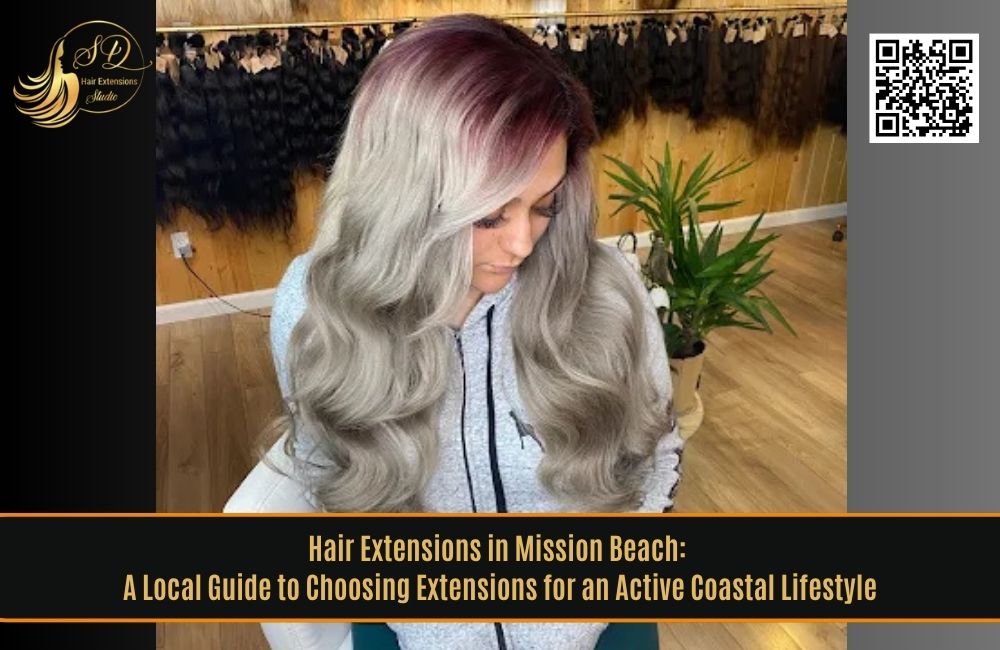
Hair Extensions in Mission Beach: A Local Guide to Choosing Extensions for an Active Coastal Lifestyle
Choosing Hair Extensions Mission Beach clients can realistically enjoy requires thinking beyond the finished hairstyle. If your normal week includes beach time, workouts, cycling, swimming, outdoor events, or frequent hair washing, the right extensions should complement that routine rather than constantly compete with it. Length and appearance matter, but so do attachment style, natural hair density, drying time, styling habits, and the level of maintenance you are comfortable managing.
An active coastal lifestyle does not mean extensions are impractical. It means the selection process should begin with how you actually live.
Start With Your Typical Week
Before deciding between extension methods, consider what happens to your hair during an ordinary seven-day period.
Someone who exercises five days a week and regularly visits the beach has different needs from someone who mainly wants extensions for work, dinners, and occasional events. Frequent activity can mean more sweat, more moisture around the scalp, additional washing, and greater exposure to wind and sunlight.
These details should be discussed before installation.
The goal is not to find supposedly “maintenance-free” extensions. All professional extensions require care. The better goal is choosing a system whose maintenance requirements are realistic for your schedule.
Your Natural Hair Still Determines What Is Possible
Lifestyle matters, but extension planning should always begin with the condition of your natural hair.
A stylist should assess strand thickness, overall density, current length, texture, haircut, and areas where the hair may be finer. This information helps determine how much extension weight the natural hair can comfortably support.
Fine hair may require lighter, carefully distributed attachments. Thick hair may need more extension density to prevent the natural ends from appearing heavy above thinner added lengths.
The correct choice balances the desired transformation with what your own hair can reasonably support.
Compare Extension Methods Through the Lens of Your Routine
K-Tips, tape-ins, and wefts create different attachment patterns, and each can suit different clients.
K-Tips use individual attachment points, allowing detailed placement throughout appropriate sections of the hair. Tape-ins use flatter panels that distribute extension hair across wider sections. Wefts create density through rows.
Rather than asking which technique is universally best, ask which method makes sense for your natural hair and daily activities.
A person who frequently changes hairstyles may prioritize placement flexibility. Someone primarily interested in substantial fullness may have different priorities. A client who washes frequently after exercise should understand how efficiently the attachment areas can be cleaned and dried.
Think Carefully About Length Before Going Very Long
Long Best Hair Extensions can create a dramatic result, but greater length also changes daily maintenance.
More hair means more time spent washing, detangling, drying, and styling. It also means more hair moving in the wind or coming into contact with sunscreen, clothing, bags, and workout gear.
For an active Mission Beach lifestyle, moderate length may sometimes offer a useful balance between transformation and practicality.
That does not mean very long extensions are off-limits. It simply means clients should understand the extra care involved before choosing them.
Density Can Affect Everyday Comfort
Extension density should look proportional to your natural hair while also feeling manageable.
Adding maximum fullness may look impressive immediately after installation, but it may create more hair than you want to handle after swimming or exercising.
Consider what you actually want to change.
If your natural length is already satisfying, extensions may be used primarily to create fuller ends. If you want substantially longer hair, more density may be necessary to create a believable transition.
A personalized plan can often achieve the desired visual change without automatically adding the greatest possible amount of hair.
Placement Should Reflect How You Wear Your Hair
Active clients often wear their hair up.
Ponytails, braids, low buns, half-up styles, and other practical hairstyles can become part of daily life when exercising or spending time outdoors. Your extension specialist should know which styles you wear most often before deciding where attachments belong.
Placement that works beautifully with loose hair may be less convenient if you frequently pull your hair back.
If you are searching for Hair Extensions Near Me, ask potential providers how your normal hairstyles will influence their placement strategy.
A customized installation should account for movement, not just the appearance of freshly styled hair in the salon chair.
Beach Time Should Be Discussed Before Installation
Living near Mission Beach makes ocean exposure an obvious consideration.
Saltwater can leave hair feeling dry and may increase tangling when it repeatedly dries on the strands. The attachment areas also need appropriate drying after swimming.
If you swim frequently rather than occasionally, tell your stylist.
This information can influence discussions about method, length, density, and home care. Someone who swims several mornings each week may benefit from a different overall extension plan than a client who enters the ocean a few times each summer.
Extensions should be selected with real habits in mind.
Consider What Happens After Your Workout
Sweat itself is only part of the equation. What matters is what you do afterward.
A workout may leave the scalp and attachment areas damp. Depending on your routine, you may wash the hair, rinse it, or simply need to dry the roots properly.
If your extensions are extremely long and dense, frequent post-workout drying may require more time than expected.
This practical issue is worth discussing before choosing the final amount of extension hair.
A beautiful result is easier to enjoy when everyday upkeep fits comfortably into your schedule.
Wind Is a Lifestyle Factor Too
Mission Beach is not only about water.
Wind can create friction and tangling, particularly with longer hair. Outdoor walks, cycling, waterfront activities, and open-air transportation can leave loose extension hair moving continuously.
Clients who spend substantial time outside may want a length that can easily be secured in a low-tension style.
A loose braid or other controlled hairstyle can be useful during windy activities, provided it is appropriate for the extension method and does not pull excessively against the attachments.
Think About How Often You Use Heat
An active lifestyle sometimes leads to more heat styling, not less.
Frequent washing may mean frequent blow-drying. A client may also straighten or curl the extensions after workouts to restore a polished look.
This can create repeated thermal exposure.
Before choosing extensions, consider whether you are comfortable changing your styling routine. Lower effective temperatures, proper heat protection, and avoiding unnecessary passes with hot tools can help reduce stress on extension lengths.
Choosing a texture that works naturally with your own hair may also reduce how much daily styling is required.
Texture Matching Can Make an Active Routine Easier
Texture deserves as much attention as color.
If your natural hair develops waves in coastal moisture while your extensions behave very differently, you may feel compelled to restyle everything frequently.
A closer texture match can make the hair easier to manage when it is not professionally blown out.
This is particularly useful for clients who prefer air-dried or minimally styled hair on casual beach days.
Extensions should ideally look cohesive during normal life, not only immediately after a salon styling session.
Color Selection Should Consider Outdoor Light
Bright natural light can reveal color differences that indoor lighting hides.
Mission Beach clients may spend considerable time outdoors, making precise color selection especially valuable. Root depth, undertones, highlights, and lighter ends should be considered rather than matching only one dominant shade.
If you have dimensional color, combining multiple extension shades may produce a more natural transition.
The objective is for the added hair to move visually with your existing color rather than appear as a separate section.
Your Maintenance Commitment Matters
Every extension method eventually requires professional attention as natural hair grows.
Before installation, understand what future appointments involve and how they fit your schedule. Ask about removal, repositioning or reapplication, and how the condition of both the natural and extension hair will be evaluated.
A method is only convenient when you can realistically maintain it.
Delaying necessary appointments because the schedule feels too demanding can undermine the experience you originally wanted.
Frequently Asked Questions
Can Active People Wear Hair Extensions?
Yes. Exercise and outdoor activities do not automatically prevent someone from wearing extensions. Method selection, appropriate placement, moisture management, and consistent home care become especially important.
Can I Swim Regularly With Extensions?
Swimming may be possible, but saltwater and chlorine require appropriate aftercare. Frequent swimmers should discuss their routine with an extension specialist before installation.
Are Shorter Extensions Easier for an Active Lifestyle?
They can require less drying and detangling time, but the right length depends on your goals and natural hair. Some active clients are comfortable maintaining much longer extensions.
Can I Put Extensions in a Ponytail for Exercise?
Many extension clients can wear ponytails, but attachment placement and tension matter. Tell your stylist before installation if ponytails are part of your regular routine.
Should I Choose Extensions Based on My Vacation Routine or Everyday Routine?
Your everyday routine should carry more weight. An installation that works for the way you normally exercise, style, wash, and wear your hair is more likely to remain practical long after the initial appointment.
Choose Extensions for the Life You Actually Live
The right extensions for an active Mission Beach lifestyle are not necessarily the shortest, lightest, or easiest method advertised online. They are the ones selected after considering your natural hair, preferred length, desired fullness, exercise schedule, swimming habits, hairstyles, texture, and willingness to maintain them.
A thorough consultation can turn those details into a realistic extension plan.
San Diego Hair Extensions Studio is located in Cardiff and serves clients throughout the greater San Diego area. For anyone considering extensions, the most useful approach is to be open about everyday habits during the consultation so the final recommendation is designed for real life rather than only for the installation-day photograph.
San Diego Hair Extensions Studio
Address: 2151 Newcastle Ave, Cardiff, CA 92007, United States
Phone: +1 858-205-2043


STAY CONNECTED


Copyright SD Hair Extensions Studio © 2025 | Privacy Policy